

Get this deal! Call now.
Speak with a vehicle protection plan specialist and get $300 off any new contract instantly.
Call 866-678-4172
or scan the code below

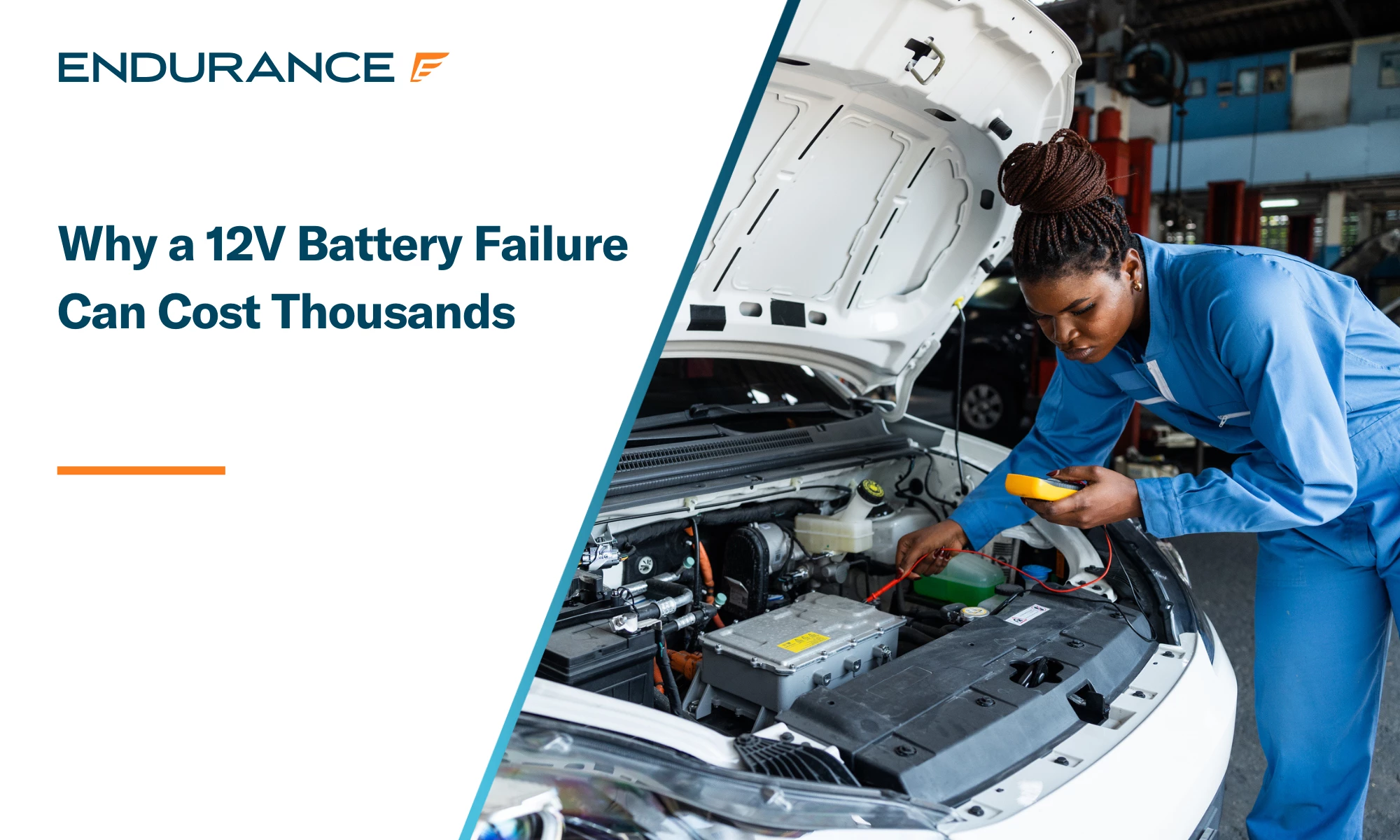
Most drivers think of a dead battery as just a minor inconvenience on the road. Maybe a quick jump start or a new battery from the auto store can get you back on the road. However, in 2026, this simple assumption can lead to a $3,000 sticker shock at the service counter. In modern electric vehicles and hybrids, the humble 12-volt battery isn’t just a throwaway maintenance item, but rather the essential connecting piece to the vehicle’s brain and communication systems.
In today’s EV architectures, a failed 12V battery doesn’t just mean a slow crank. It can actually “brick” the entire vehicle system by disabling low-voltage communications that start and run the car. Some manufacturers have issued recalls involving low-voltage battery or charging-related faults that can leave EVs unable to drive, despite the high-voltage battery being fully charged. As a result, a seemingly small component failure may cascade into an expensive repair, with costs well beyond typical battery pricing.
Learn why this problem occurs and how you can stabilize your budget for the year.
To understand the high bill for battery cost, it’s important to know what happens when battery health fails in an EV. In many modern EVs, something known as the Integrated Charging Control Unit (ICCU) combines multiple functions. It handles both AC and DC charging, converts high-voltage battery power down to 12V, and manages auxiliary power delivery to control modules. In short, it essentially acts as the vehicle’s power distribution brain.
On standard gas vehicles, the alternator simply charges the 12V battery and runs accessories as the car goes. The ICCU does a similar function via DC-DC conversion and sophisticated control logic, meaning it’s far more complex and costly than a simple alternator.
In the event that a 12V EV battery fails or is installed improperly, the ICCU may experience a voltage surge or abnormal load. When this happens, the stress can damage the internal voltage-control semiconductor within or fuses within the unit, thereby requiring the entire assembly to be replaced.
One such safety recall issued by Hyundai via the National Highway Traffic Safety Administration (NHTSA) in late 2024 was due to this exact reason. While a 12V EV battery replacement itself may cost less than $300, depending on the automotive you have, the ICCU assembly can run into the thousands. Once you add in the labor time for specialized EV technicians, software reprogramming, and diagnostics on top of the battery replacement costs, this helps explain why total costs can increase quickly.
In traditional gas cars, a 12V battery failure means that the starter doesn’t crank and the lights go dim. An annoying, yet localized problem. In today’s EVs and hybrids, however, the 12V electric vehicle battery serves a far greater purpose to the vehicle as a whole. This system energizes essential modules, including:
Without sufficient charge, these systems can go dark or lose communications entirely, potentially rendering the vehicle unable to even enter drive mode. Additionally, many EV control systems actively monitor battery pack health. When voltage drops below certain thresholds, diagnostic trouble codes are triggered, and the system may disable charging or enter a fail-safe mode.
Depending on the EV or hybrid you have, this can lead to the ICCU going into a shutdown mode until service intervention happens. Since all of these systems are interlinked on EV and hybrid vehicles, and not on gas vehicles, even a relatively small 12V fault can force expensive diagnostic workflows and repairs that you otherwise may not have had.
Your emergency fund is likely designed to handle a few hundred dollars of unexpected auto costs, but not several thousand. Consider the following scenario. You wake up and plug in your EV, only to be met with a ‘12V battery fault’ error message. Thinking it’s nothing, you book a service, and after diagnostics, you’re told that the ICCU needs replacement due to the error. All in, with parts, labor, and software provisioning, you’re given an estimate of $2,800-$3,000 for repairs. All of a sudden, the 12V battery issue has become a far bigger pill to swallow.
By contrast, extended electrical system protection or EV-specific maintenance vehicle protection plans can help. When compared side-by-side with the potential cost of a control module replacement or diagnostic service, an extended warranty or a vehicle service contract may help some drivers manage certain repair costs more predictably. A potential $3,000 up-front expense could instead be split over multiple years in the form of set, predictable monthly payments for a coverage plan.
With a hybrid auto protection plan from Endurance, you can rest assured knowing certain hybrid-related components may be eligible for coverage:
Batteries and HEV packs are excluded, except in Tesla models. Battery coverage availability varies by vehicle and plan, and should be confirmed in your contract details.
Seeing a battery warning indicator can lead to a muscle memory reaction where you simply want to jump-start your car. However, this can cause serious damage to an EV if done improperly. In standard gas cars, the alternator seamlessly picks up charging once the engine is running. In EVs, though, charging the battery incorrectly, whether through jumping or improper charging, can cause voltage spikes through sensitive electronics, memory loss in control modules, and communication errors with components.
The most important rule to remember is that to jump-start an EV, it must have a 12-volt battery with a negative ground system. If it doesn’t, it is impossible to jump it. Also, never jump-start your EV while it is connected to a charger, whether that be a household outlet, wall charger, or a DC fast charger.
It’s worth noting that some automakers recommend using professional diagnostic procedures when addressing 12V issues in EVs and hybrids, with some service bulletins even warning of the damage self-jumping can cause.
In addition, you should never jump-start a gas car with your EV, as voltage can potentially rebound and fry sensitive components.
If you drive a modern EV or hybrid, especially one with an advanced charging architecture, a simple 12V or lithium-ion battery issue can sometimes lead to more expensive diagnostic or electrical repairs. From the complexity of integrated charging control electronics to the vulnerability of electric vehicle networks when power drops, there’s nothing minor about these problems. Widespread recalls and customer reports underline that these issues have been significant enough to prompt recalls and service campaigns in some cases.
If you’re budgeting for 2026 and beyond, one way some drivers prepare for rising repair costs is by considering additional coverage. A comprehensive protection plan from Endurance can help keep your hybrid covered, with the exception of the battery itself if you own a Tesla.
To learn more about how Endurance can keep you moving on the road, contact our representatives at (800) 253-8203 or request a FREE email quote. You can also shop online to see your price and plan recommendations right away.
Visit our extended warranty blog for more on hybrid and electric cars from Chevy, Ford, Nissan, and other EV market automakers.



We've received your vehicle information and will contact you shortly with your quote.
— OR —
Start shopping for a coverage plan now.


We're here to make sure you get the most comprehensive EV protection. That's why we've partnered with Xcelerate Auto to offer you transparent and dependable Tesla coverage.
Want us to contact you about XCare coverage for your Tesla?

Your protection is our top priority. Your quote is in progress and you will
receive a confirmation
email shortly.

Speak with a vehicle protection plan specialist and get $300 off any new contract instantly.
$300 off + FREE Elite Benefits for 1 year!
By clicking the button, you consent to Endurance using automated technology to call, email, and text you using the contact info above, including your wireless number, if provided, regarding auto protection or, in California, mechanical breakdown insurance. You also agree to the Endurance Privacy Policy and Terms and Conditions. Consent is not a condition of purchase, and you can withdraw consent at any time. Message and data rates may apply.
Speak with a vehicle protection plan specialist and get $300 off any new contract instantly.
Call 866-678-4172
or scan the code below

Simply fill out the information below and we will follow up fast with your free no-obligation quote.
By clicking the button, you consent to Endurance using automated technology to call, email, and text you using the contact info above, including your wireless number, if provided, regarding auto protection or, in California, mechanical breakdown insurance. You also agree to the Endurance Privacy Policy and Terms and Conditions. Consent is not a condition of purchase, and you can withdraw consent at any time. Message and data rates may apply.

To speak to a vehicle protection plan specialist and get $300 off any new contract instantly
Scan the code below



Justin Barrett, owner of Barrett Automotive shops in Eastanollee and Cornelia, Georgia, has nearly 20 years of experience in vehicle repair and diagnostics. Since founding his auto repair facilities with his wife in 2010, he has been dedicated to helping drivers with everything from routine maintenance to complex repairs. Read more about Justin.