

Get this deal! Call now.
Speak with a vehicle protection plan specialist and get $300 off any new contract instantly.
Call 866-678-4172
or scan the code below
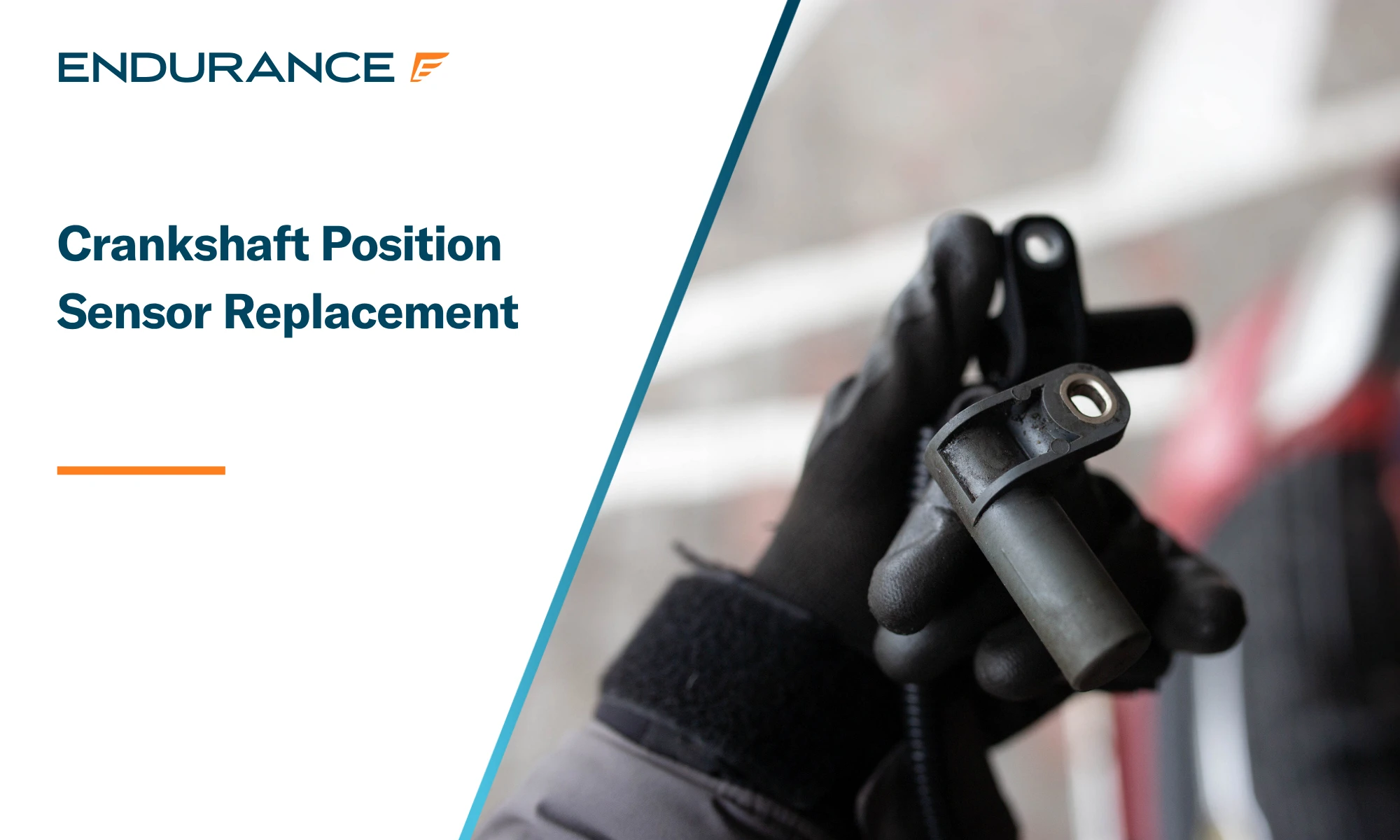
Your engine is firing fuel injectors and spark plugs thousands of times every minute. The only reason it isn’t doing this blindly is because of your crankshaft position sensor. This small component tells your car’s ECU exactly where the crankshaft is in its rotation at any given millisecond, which is the only way the engine computer can time the combustion process correctly.
If this signal drops out or goes erratic, the results are noticeable. Your engine may stall for no apparent reason, cranks without firing may occur, or the engine might misfire. Crankshaft position sensors typically begin to show problems anywhere in the 50,000-100,000-mile range, depending on your vehicle, meaning you’re more likely to encounter this issue on a car you’ve held for years.
Given that symptoms such as rough idling, hard starts, and intermittent stalling overlap with fuel delivery problems, crankshaft position sensor failure can sometimes be mistaken for fuel delivery or ignition-related issues. By learning the signs your sensor is failing and what to do about them, you can avoid wasting time and replacing the wrong parts.
The four most common symptoms of a bad crankshaft position sensor include:
It’s worth a quick note that some cars may not start at all with a P0335 code, whereas others may just run poorly and suffer from a lack of engine power. The most important clue you should keep an eye out for, though, is intermittency.
Crankshaft position sensor issues are, at times, intermittent. Your vehicle may start and run for some time until the problem occurs. One classic pattern seen is a sensor that functions normally off a cold start, but begins to fail once heat soaks into the engine. This pattern may seem random to you as a driver, but it’s a telltale sign of a failing sensor.
The first step in diagnosing whether or not you have an issue with the crankshaft position sensor is to plug in an OBD-II scanner. Pull the codes off the scanner and confirm a P0335 or P0336 code, which would indicate such a problem. The former of the two is particularly critical because the crankshaft position sensor directly affects engine timing and synchronization.
If there’s no accurate data being sent from the sensor, the engine control module can’t properly manage ignition timing or fuel injection. A basic Bluetooth OBD-II scanner should cost only $20-$40, a better price than hundreds for a part replacement.
Once you’ve confirmed the code, inspect the electrical connector for damage and grab a multimeter. For two-wire crankshaft sensors, test continuity and voltage. The continuity should be somewhere between 200-1,000 ohms, but manufacturer specs vary, so compare against your service manual. A reading outside of the specified range can indicate the sensor has failed internally.
An oscilloscope will give you the most definite answer, as it will show the actual signal waveform, meaning you can see exactly where the signal breaks down, but most people don’t have this lying around their garage. For the overwhelming majority of DIY diagnoses, the scanner and multimeter path is sufficient to confirm the problem.
The crankshaft position sensor location and its accessibility will be the biggest factor in whether or not you should handle the issue yourself or visit a shop. Some crankshaft sensors sit near the front or top of the engine and are easy to reach. Others, typically on front-wheel-drive cars, are buried near the transmission and require removing other parts at an auto repair shop.
On many inline four-cylinder engines, the sensor is accessible from right above the timing cover. With basic hand tools, the fix can be done in 20-30 minutes. When access requires subframe work or pulling parts out, or if your vehicle requires a relearn procedure, it’s worth booking a professional to ensure no mistakes are made.
If you find you have a bad crankshaft sensor using diagnostic tools, your natural next question will be about the cost of replacement. Parts themselves can be as low as $84-$133, depending on your vehicle make, whereas labor can be between $135-$199. This means handling sensor problems yourself will only cost as much as the former range plus whatever you spend on an OBD-II scanner. If you need to visit a repair shop, though, your all-in cost will be closer to $220-$331 on average.
It’s worth mentioning that if you own a luxury or European vehicle, parts can be harder to source, which can drive up the cost. Similarly, if your vehicle has a hard-to-access sensor, the labor costs may also be higher than expected. Taking this into account, car maintenance for this issue shouldn’t eclipse $500-$600, depending on vehicle design, labor rates, and parts availability.
A crankshaft position sensor replacement is a relatively contained repair job, but only if you catch it earlier rather than later. Left unaddressed, the intermittent signal loss can stress ignition coils and cause incomplete combustion events in the engine over time. Prolonged misfires or incomplete combustion events may contribute to additional engine or exhaust-system repairs over time, and affect major parts like the catalytic converter. Those downstream repairs are where costs can rise quickly, potentially even into the thousands.
Coverage for crankshaft position sensor repairs varies depending on your extended warranty or vehicle service contract terms. Certain Endurance Warranty plans may include coverage for related components. Across our range of plans, from Secure Plus through Superior and up to our most comprehensive Supreme plan, there are options available. To see the scope of coverage at each tier, you can examine sample Endurance contracts and compare them to the option you’re considering.
Beyond the parts cost, Endurance administers plans directly, meaning when you file a claim, you’re talking to the people who actually manage your coverage. Pair this with the ability to take your vehicle to any certified repair shop, and the claims process may be easier to navigate.
To see how Endurance can protect your vehicle’s crankshaft sensor and more, contact a service plan advisor at (800) 253-8203 or request a FREE quote. You can also shop online to see your plan recommendation and pricing right away.




We've received your vehicle information and will contact you shortly with your quote.
— OR —
Start shopping for a coverage plan now.


We're here to make sure you get the most comprehensive EV protection. That's why we've partnered with Xcelerate Auto to offer you transparent and dependable Tesla coverage.
Want us to contact you about XCare coverage for your Tesla?

Your protection is our top priority. Your quote is in progress and you will
receive a confirmation
email shortly.

Speak with a vehicle protection plan specialist and get $300 off any new contract instantly.
Spooky Savings: $300 off + FREE Elite Benefits for 1 year!
By clicking the button, you consent to Endurance using automated technology to call, email, and text you using the contact info above, including your wireless number, if provided, regarding auto protection or, in California, mechanical breakdown insurance. You also agree to the Endurance Privacy Policy and Terms and Conditions. Consent is not a condition of purchase, and you can withdraw consent at any time. Message and data rates may apply.
Speak with a vehicle protection plan specialist and get $300 off any new contract instantly.
Call 866-678-4172
or scan the code below

Simply fill out the information below and we will follow up fast with your free no-obligation quote.
By clicking the button, you consent to Endurance using automated technology to call, email, and text you using the contact info above, including your wireless number, if provided, regarding auto protection or, in California, mechanical breakdown insurance. You also agree to the Endurance Privacy Policy and Terms and Conditions. Consent is not a condition of purchase, and you can withdraw consent at any time. Message and data rates may apply.

To speak to a vehicle protection plan specialist and get $300 off any new contract instantly
Scan the code below


With over three decades of professional experience in the automotive industry, Dario brings a wealth of knowledge and expertise to the Endurance team. He hails from Argentina, where he received his technical trade education and pursued mechanical engineering. Read more about Dario.