

Get this deal! Call now.
Speak with a vehicle protection plan specialist and get $300 off any new contract instantly.
Call 866-678-4172
or scan the code below
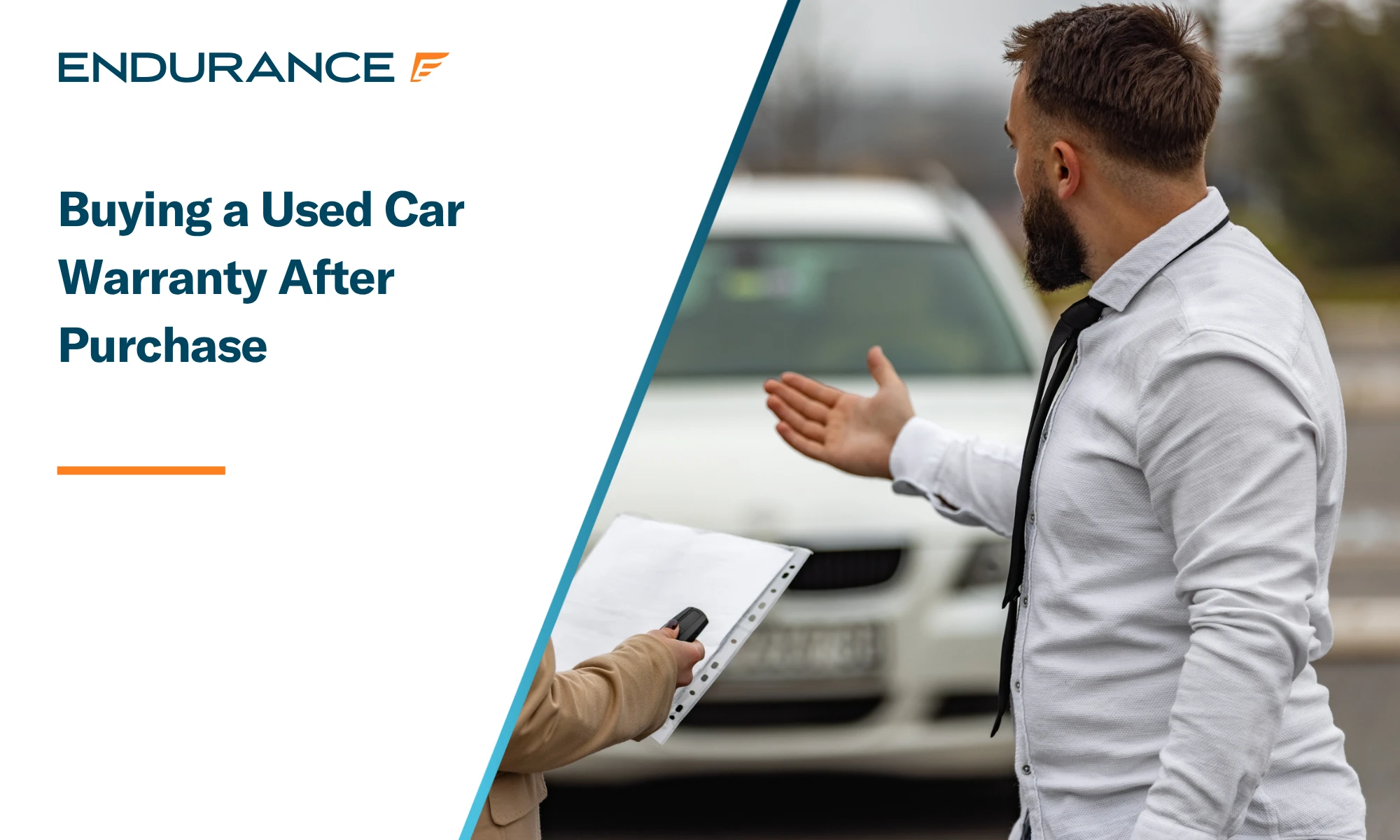
Buying a car from a dealer often includes the option to add an extended warranty or vehicle service contract (VSC) at the time of purchase. During the purchase process, many dealerships offer buyers the opportunity to add a vehicle service contract before completing the sale. Yet buyers don’t have to give in to this pressure.
Through independent providers, coverage against breakdowns and car repair costs can typically be added months or years after ownership begins, ordinarily at a lower cost than through a dealer. Many dealerships also offer reputable vehicle service contracts through established administrators, giving buyers the option to purchase coverage either during the vehicle purchase or later from a provider directly.
The ability to secure an auto protection plan depends on the vehicle, as well as the age, mileage, and condition requirements set by the warranty provider. The contract will generally include exclusions for existing mechanical problems and have a waiting period before coverage begins.
Keep reading as we explain the differences in purchasing an extended car warranty from a dealership or a vehicle service contract from a direct administrator like Endurance. You’ll also learn about qualification requirements and whether purchasing coverage makes financial sense.
Consumers often overlook that most dealers are simply resellers of aftermarket warranties. The service contract is administered by a third party, not the business that sold it. That can affect what you pay for coverage.
According to Haig Partners’ Q3 2025 Report, the average dealership generates around $2,500 in finance and insurance service profit per vehicle retailed, including extended warranties. Buying through a dealership and purchasing directly from an administrator are two different buying experiences. Dealer pricing and available plans can vary, while buying directly from an administrator allows consumers to compare plans and work directly with the company that administers coverage.
Whether you purchase through a dealership or directly from an administrator, the most important step is reviewing the contract, understanding the coverage, and choosing a reputable provider.
Another advantage of buying a plan without a dealer in the middle is the ability to work directly with a warranty company that processes claims, manages contracts, and pays for covered repairs. This reduces downtime and gets plan holders back on the road sooner.
You’ll also be able to choose from different plans. For example, Endurance offers multiple coverage options depending on your vehicle type, age, and mileage. In addition, we have flexible payment options. Also, contract terms can be tailored to your individual driving habits and deductible preferences.
Ultimately, purchasing after the sale gives buyers additional time to compare providers, review sample contracts, and choose the coverage that best fits their needs.
While many factors can affect a vehicle’s eligibility for coverage, age and mileage are usually the most important. Each warranty company sets its own standard, with some focusing on newer vehicles with relatively low mileage. Others may offer more expansive coverage designed specifically for older vehicles and higher-mileage cars.
Fortunately, protection for vehicles with more than 100,000 miles is possible, although coverage options may vary by company. Providers view mileage as a significant risk factor. That makes sense; the more miles a car has, the greater the likelihood of something failing. That risk is connected to contract pricing. Vehicle age also matters. A five-year-old vehicle with 70,000 miles typically presents a different risk for the warranty company than a 15-year-old vehicle with 170,000 miles.
Endurance is one of the few providers that has programs with no mileage restrictions. For owners researching coverage for older vehicles, resources such as an Extended Warranty for Cars Over 150k Miles guide or an overview of Where to Find an Extended Warranty for Older Cars can help further explain available options.
Car owners considering an extended warranty should be aware of the pre-existing condition exclusion that exists in most vehicle service contracts. Providers won’t pay for any repairs related to a problem that was present before coverage began.
As a result, it’s reasonable to wonder how warranty companies identify pre-existing conditions. There are several methods, including:
Some providers may require a detailed inspection before approving coverage. A technician will assess the vehicle’s condition and mechanical systems to identify any problems. Coverage may be denied, or repairs may be required before approval is possible.
Some breakdowns leave telltale signs of an issue that was present before an extended warranty was purchased. A claims administrator may review repair records, maintenance history, diagnostic results, and technician reports to confirm these findings.
For example, if an engine develops symptoms of long-term oil starvation (which can cause valve or piston damage) shortly after coverage begins, the provider may determine that the damage existed before the contract became effective.
Starting extended warranty protection sooner rather than later can minimize the risk that a pre-existing condition will affect claims approval. Problems may already be present if the car shows red flags such as a slipping transmission, overheating, a check engine light, or strange noises.
As covered in more detail below, most vehicle service contracts include a provision that delays coverage from becoming active until a specific mileage or time threshold is reached.
A waiting period is standard in the extended warranty industry and helps ensure that vehicle service contracts are financially sustainable. Without this requirement, an owner could wait until a vehicle breaks down before securing coverage. Providers wouldn’t stay in business very long under this scenario.
The limitation varies by company, but 30 days and 1,000 miles are fairly common. Waiting periods like this establish a baseline and help prove that a vehicle was in good operating condition when the contract was purchased. Claims made during this qualifying period may be denied as pre-existing conditions.
Some service contracts can be transferred to a subsequent owner, adding value to the car and making the vehicle more appealing. It’s an easy way to remove the uncertainty some buyers may have about a used-car purchase.
Not all companies offer this benefit, so it’s worth confirming availability before signing up for a service contract. A transfer form and a smaller administrative fee ($50 is typical) are usually part of the process, but the particulars will vary by provider.
Purchasing a vehicle service contract doesn’t have to be complex. Still, you’ll want to take a few practical steps before buying.
A reputable warranty provider will make sample contracts readily available for review of the fine print before a purchase. This is a good opportunity to review terms, such as a waiting period, pre-existing conditions, transferability, cancellations, refunds, and the claims process. Make sure you understand the different provisions and ask questions if anything is unclear. You should also confirm how the contract treats routine maintenance, since oil changes, brake pads, tires, and similar upkeep are typically handled separately from breakdown coverage.
Many providers offer different deductibles, allowing plan holders to balance premium cost with out-of-pocket expenses. Many providers offer deductible options of $0, $100, or $200, allowing plan holders to balance premium cost with out-of-pocket expenses. A higher deductible typically means lower monthly payments, while a zero-dollar deductible provides the most predictable repair costs.
Some warranty companies may allow plan holders to use any licensed repair facility for covered repairs, while other providers may restrict customers to a particular network. Flexibility usually offers the greatest advantages, enabling owners to use a trusted independent mechanic for routine work and any shop if a breakdown occurs while traveling. For example, Endurance plan holders can also use dealership service departments and specialty shops for covered repairs.
Consider getting a comprehensive inspection by an independent repair shop. Even if the warranty company doesn’t require it, an inspection can catch existing issues that may affect eligibility and can provide evidence that the vehicle was in good operating condition before obtaining coverage.
Timing matters for buying an extended car warranty. As mentioned, it’s too late if problems have already developed. So, securing coverage when the car is running well and well within the provider’s eligibility requirements is ideal.
You also need to consider your comfort level with and risk tolerance for paying for repairs out of pocket. You may be able to handle a $500 repair, but what if that shop bill turns into four figures or worse? This is particularly relevant for someone with a relatively new car that’s about to lose factory warranty protection. Keep in mind that just because a car is currently reliable doesn’t mean it will remain so in the weeks or months ahead.
Ultimately, you don’t want to be in a situation where a mechanical issue has already developed. It becomes a pre-existing condition that a newly purchased service contract won’t cover. In addition, buying an extended warranty sooner usually means lower premiums and the availability of more comprehensive programs.
With over two decades of experience, Endurance has become one of America’s largest direct-to-consumer warranty providers. One of the company’s signature features is an extensive range of plans that start with essential powertrain protection (for the engine, transmission, and drive axles) and end with a top-tier exclusionary plan most similar to a manufacturer’s warranty. There are also intermediate programs that balance coverage and cost. Notably, Endurance even offers service contracts that aren’t mileage-limited.
Endurance stands out in a crowded field thanks to:
If you didn’t purchase coverage when you bought your vehicle—or you’re exploring additional protection options—you may still be able to purchase a vehicle service contract from an independent provider.
Learn about your Endurance Warranty coverage options by requesting a FREE quote. Instant plan and pricing information is also available at the Endurance online store.
For specialized coverage needs, including reviewing high-mileage plans, contact an Endurance plan advisor at (800) 253-8203 for personalized assistance.
Learn more about extended warranties, repair advice, car reviews, maintenance tips, and more by reading the Endurance Blog. You can also explore our Vehicle Guides to learn which models have a history of repairs.

We've received your vehicle information and will contact you shortly with your quote.
— OR —
Start shopping for a coverage plan now.


We're here to make sure you get the most comprehensive EV protection. That's why we've partnered with Xcelerate Auto to offer you transparent and dependable Tesla coverage.
Want us to contact you about XCare coverage for your Tesla?

Your protection is our top priority. Your quote is in progress and you will
receive a confirmation
email shortly.

Speak with a vehicle protection plan specialist and get $300 off any new contract instantly.
Spooky Savings: $300 off + FREE Elite Benefits for 1 year!
By clicking the button, you consent to Endurance using automated technology to call, email, and text you using the contact info above, including your wireless number, if provided, regarding auto protection or, in California, mechanical breakdown insurance. You also agree to the Endurance Privacy Policy and Terms and Conditions. Consent is not a condition of purchase, and you can withdraw consent at any time. Message and data rates may apply.
Speak with a vehicle protection plan specialist and get $300 off any new contract instantly.
Call 866-678-4172
or scan the code below

Simply fill out the information below and we will follow up fast with your free no-obligation quote.
By clicking the button, you consent to Endurance using automated technology to call, email, and text you using the contact info above, including your wireless number, if provided, regarding auto protection or, in California, mechanical breakdown insurance. You also agree to the Endurance Privacy Policy and Terms and Conditions. Consent is not a condition of purchase, and you can withdraw consent at any time. Message and data rates may apply.

To speak to a vehicle protection plan specialist and get $300 off any new contract instantly
Scan the code below


Dave is an automotive journalist combining a deep passion for cars, hands-on mechanical experience, and dealership insight. His writing primarily focuses on consumer auto advice and enthusiast pieces. A regular contributor to SlashGear.com and other leading automotive platforms, Dave earned his BA in Journalism from The George Washington University.