

Get this deal! Call now.
Speak with a vehicle protection plan specialist and get $300 off any new contract instantly.
Call 866-678-4172
or scan the code below
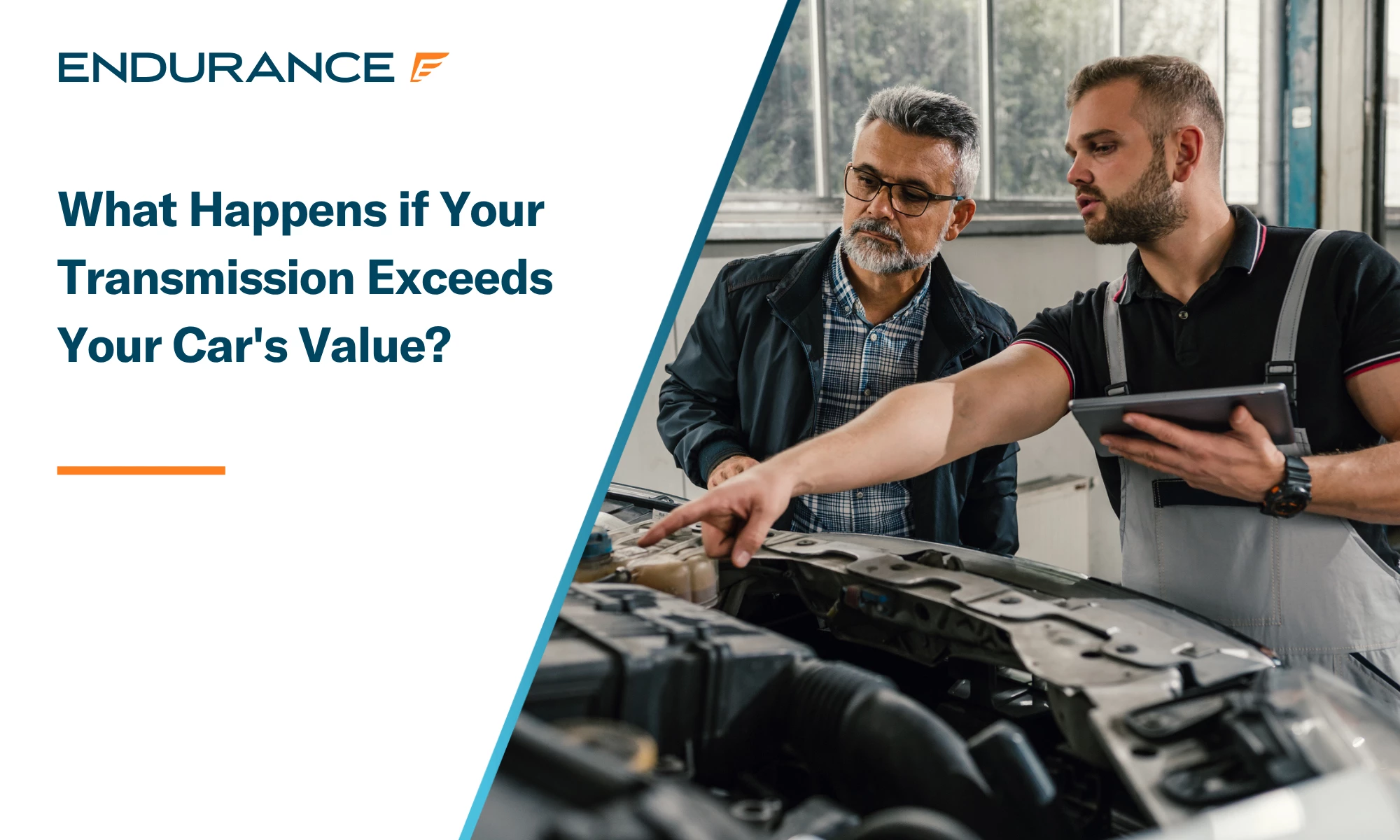
Transmission repair is something most car owners don’t want to think about, especially when considering their car worth. Gearbox problems can be even more worrisome if the work costs more than the vehicle is worth and you’re protected by an extended warranty. Most of these vehicle service contracts include a provision that limits payouts for covered repairs. The threshold may be capped at a specific dollar amount or up to the value of the vehicle. On a high-ticket repair, the provider may issue a payout based on the contract terms rather than approve the full repair.
Admittedly, this is a rare situation, but it’s something to be aware of if you have an older used car. You may still benefit from extended car warranty coverage, but the result might be different from what you expected. With an average transmission replacement costing up to $6,400, an actual cash value vs repair cost scenario may be possible. It’s not unusual for a new transmission in high-end vehicles to approach $10,000 or more.
Learning when a vehicle is uneconomical to fix, along with the associated rules, can help you determine if an extended warranty is worth it. You’ll also be prepared when facing a high-ticket repair for your covered car.
Before diving into the details, it’s helpful to understand one of the fundamentals of vehicle payouts: actual cash value (ACV). In simple terms, ACV reflects what your car’s market value was immediately before the loss, taking depreciation into account. Providers estimate this using market data, condition, mileage, equipment, and regional demand. It often ends up lower than dealer retail pricing and may differ from wholesale auction value.
Except for the engine, the transmission is usually the most expensive vehicle component to replace. Making matters worse, the simple gearbox units of a few decades ago have been replaced by sophisticated electronic systems with integrated control modules, sensors, and adaptive software. At the same time, more vehicles are equipped with a continuously variable transmission (CVT), which often requires replacement rather than repair after failure.
When transmission repair is possible, work is often centered around replacing the mechatronic assembly. It’s a sealed component that combines hydraulic controls, solenoids, and electronic circuitry into a single system. When it fails, the entire unit has to be replaced rather than working on individual parts.
Labor is also a significant contributor to transmission repair costs. In some vehicles, accessing the gearbox requires removing the subframe and exhaust system just to reach the case. Following reinstallation, software updates are often needed.
Transmission replacement costs in 2026 are also affected by the fact that car repairs are generally more expensive. Owners have been spending 43% more since 2019 to keep their cars on the road. These factors create a mismatch; repair costs rise as vehicle value drops. The financial viability of some service work can come into question when these two lines cross.
You may be familiar with how “total loss” works in a car insurance situation, often following car accidents. Following an accident, a car owner files a claim with the insurance company. The insurance adjuster finds that the repair estimate exceeds the value of the car (or meets a specific threshold) and declares it a totaled car. A similar calculation can occur in the case of a mechanical failure on a vehicle covered by an extended warranty.
If you already have this type of coverage or are considering adding it, check the contract terms for extended warranty total loss rules or similar provisions. These details define what the provider will spend to repair your car and what happens if the costs exceed the vehicle’s value.
The specifics may vary between providers, but generally involve determining the car’s value through valuation guides and condition assessments. Mileage also plays a role. For example, if the vehicle is valued at $4,800 but installing a new transmission costs $6,200, the provider may issue a payout based on the vehicle’s value rather than approve the full repair.
The probability of this set of circumstances happening increases as the car ages. Depreciation is ongoing (though it may slow over time), whereas the cost of repairs doesn’t usually decrease on older vehicles. Chances are, a new transmission will cost about the same for a 2007 Toyota Camry as it will for a 2011 model.
A payout rather than a paid repair may seem to undermine the purpose of an extended warranty, but this coverage actually helps reduce the financial impact of major repairs.
Should you have an extended warranty claim that reaches a value cap, it’s not the end of the road. Consider the alternatives without this coverage: pay for repairs out of pocket or retire the vehicle and absorb the loss. For many drivers, the cost of replacing a transmission isn’t realistic, especially if the car is worth less than the repair.
With an auto protection plan in place, the outlook changes as the financial impact isn’t as significant. The full repairs may not be paid for, but you’ll have a partial payment or an amount that can be used toward another vehicle.
Let’s break down the main options if an extended warranty claim turns into a payout:
Some vehicles with high depreciation rates or complex systems (or both) are more vulnerable to value-based claim limits. European luxury cars are notorious for sharp valuation declines and harder-to-repair components. Replacing a sophisticated transmission can quickly max out the limits of an extended warranty.
While Jeep Wranglers generally hold their value well, depreciation eventually takes its toll. Add the need for a rugged transmission, and repair costs can skyrocket. As mentioned, CVTs are more likely to need replacing than repairing, creating additional scenarios where value limits apply.
For a real-world look at vehicle valuations and transmission replacement costs, we’ve examined data from Kelley Blue Book (KBB). Because consistent ACV information isn’t publicly available, we’re using KBB estimates for trade-in value, which may not align with actual ACV calculations.
The valuations below are based on good condition examples with average mileage. Replacement costs use the highest KBB estimate for an independent repair shop.
| Year/Make/Model | Estimated Value | Transmission Cost |
| 2016 BMW 328i xDrive | $7,950 | $9,092 |
| 2008 Jeep Wrangler Unlimited Sahara | $5,225 | $5,415 |
| 2015 Nissan Murano SL | $4,980 | $4,902 |
| 2013 Mercedes-Benz C300 4Matic | $4,250 | $6,463 |
| 2010 Ford F-150 XLT SuperCrew | $5,187 | $5,550 |
| 2014 Chevrolet Equinox LT | $3,200 | $5,212 |
One way to maximize your coverage is to take advantage of an exclusionary vehicle service contract, like Endurance Supreme. These plans have the fewest exclusions and offer protection most similar to a new car warranty.
Seeing that a transmission replacement can cost many thousands of dollars can be worrisome. Having to pay for the work yourself or junk your car is even worse. An auto protection plan can help make the cost of car ownership more predictable. Instead of dealing with the peaks and valleys of repair costs, you pay a set monthly premium that typically doesn’t change over the life of the contract.
Stabilizing your spending to stay on the road is crucial, as ownership is expensive. AAA estimates that the average total cost of owning and operating a vehicle is over $11,500 annually. Keeping your current car can help stretch the budget.
Endurance offers more than a hedge against breakdowns and expensive repairs. Every plan includes 24/7 roadside assistance with towing and lockout support. Rental car reimbursement, trip interruption protection, and a 30-day money-back guarantee are other benefits. Importantly, plan holders can choose any licensed facility for covered repairs. You can even select a dealership service department or specialty shop (a bonus for complicated repairs like transmission work).
Endurance also offers one year of Elite Benefits, offering perks like tire repair and replacements, windshield coverage, key fob replacement, and collision repair reimbursement.*
Learn how to be ready for expensive repairs with an Endurance Warranty plan. Request a FREE quote or explore the Endurance online store for instant plan and pricing information. Endurance also offers customized coverage for commercial-use vehicles, high-mileage cars, and other unique situations. Call (800) 253-8203 to speak with an Endurance representative about your options.
The Endurance blog offers hundreds of free articles covering repair advice, DIY tips, vehicle reviews, warranty insights, and more.


We've received your vehicle information and will contact you shortly with your quote.
— OR —
Start shopping for a coverage plan now.


We're here to make sure you get the most comprehensive EV protection. That's why we've partnered with Xcelerate Auto to offer you transparent and dependable Tesla coverage.
Want us to contact you about XCare coverage for your Tesla?

Your protection is our top priority. Your quote is in progress and you will
receive a confirmation
email shortly.

Speak with a vehicle protection plan specialist and get $300 off any new contract instantly.
$300 off + FREE Elite Benefits for 1 year!
By clicking the button, you consent to Endurance using automated technology to call, email, and text you using the contact info above, including your wireless number, if provided, regarding auto protection or, in California, mechanical breakdown insurance. You also agree to the Endurance Privacy Policy and Terms and Conditions. Consent is not a condition of purchase, and you can withdraw consent at any time. Message and data rates may apply.
Speak with a vehicle protection plan specialist and get $300 off any new contract instantly.
Call 866-678-4172
or scan the code below

Simply fill out the information below and we will follow up fast with your free no-obligation quote.
By clicking the button, you consent to Endurance using automated technology to call, email, and text you using the contact info above, including your wireless number, if provided, regarding auto protection or, in California, mechanical breakdown insurance. You also agree to the Endurance Privacy Policy and Terms and Conditions. Consent is not a condition of purchase, and you can withdraw consent at any time. Message and data rates may apply.

To speak to a vehicle protection plan specialist and get $300 off any new contract instantly
Scan the code below


After more than 16 years as a technician and service advisor, Adam Karner transitioned to the auto protection industry in 2009. As a Product Manager for Endurance Dealer Services, he brings valuable hands-on experience. Read more about Adam.