

IIHS Study Reveals Drivers Are More Likely to Use Phones While Speeding
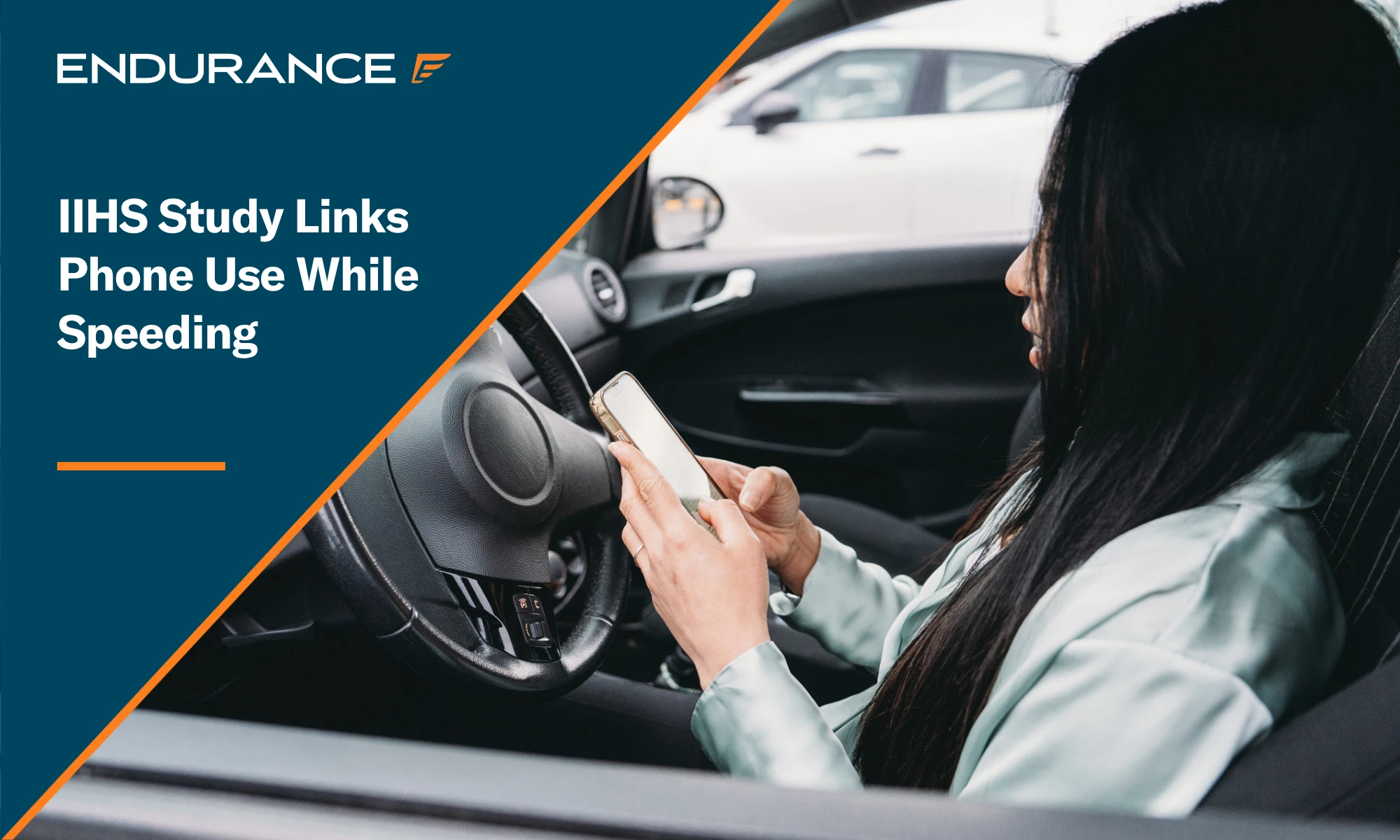
A new study from the Insurance Institute for Highway Safety (IIHS) has revealed a dangerous link between cellphone use and speeding. The data collected from the safe-driving apps of several auto insurance companies showed that drivers were more likely to use their cellphones on roads with higher speed limits.
The trend poses a greater crash risk due to a driver’s inability to react quickly at high speeds and contradicts what safety experts previously believed about distracted driving patterns.
What the Study Found
After analyzing 4 months’ worth of telematics system data—information that insurance companies collect from safe-driving apps to monitor, encourage, and incentivize safe driving practices—IIHS researchers found that drivers used their phones more while speeding. The data was collected across 600,000 road trips taken between July and October 20224.
The results, published in April 2026, showed that drivers spent 12% more time using their phones for every 5 mph they went above the posted speed limit on limited-access roads. These roads included highways, freeways, and roads where automobiles can enter and exit only via on- and off-ramps. The study, however, did not include phone use when drivers were stopped at red lights or railroad crossings.
Additional distracted driving statistics revealed the following risky behaviors:
- On limited-access roads with a 70 mph speed limit, drivers increased their phone use by 9% for every 5 mph they were over the limit.
- Phone handling increased by 3% on other roads, such as arterials connecting towns, for every 5 mph drivers exceeded the speed limit (45-50 mph). Arterials typically have traffic lights, stop signs, and roundabouts.
- On 55-mph roads, drivers increased their phone use by 7% for every 5 mph they went above the speed limit.
Why This Reverses What Experts Previously Believed
Earlier road-safety research indicated that drivers mostly use their smartphones when moving slowly, like in traffic jams or at stoplights. But those studies combined data on both idle time and active driving. The new IIHS study only looked at data from Cambridge Mobile Telematics (CMT), via insurance companies’ safe-driving apps, which filtered out phone use while driving at slower speeds or stopped at intersections.
Specifically, driver phone use was considered when the sensors detected that a device was being moved or rotated while the screen was unlocked. The apps use your phone’s sensors and GPS to measure how fast you’re driving, when you accelerate or slow down quickly, and where and when you are driving.
Then, researchers compared the total time drivers used their phones to the total time they spent driving. To detect speeding, the system used GPS to track the car’s location and compare it against a database of speed limits. The researchers then looked at how often drivers used their phones on different types of roads, at different speed limits, and while driving at various levels above the speed limit (like going 5-10 mph over a 60-65 mph limit on a highway).
Why the Combination of Speeding and Phone Use Is Especially Dangerous
Speeding and using a phone while driving are both dangerous on their own, but doing both at the same time is even worse. Driving faster gives you less time to react and makes crashes more severe. Handling your phone means you’re not fully paying attention to the road when you need to be most alert. When these two risky behaviors occur together, the chance of crashing increases even more.
The Bigger Picture: Enforcement and Policy
IIHS researchers suggest treating speeding and distracted driving as one issue, since they often go hand in hand. But figuring out how to address both at once isn’t simple. For example, incentivizing safe driving with lower premiums—as seen with the safe-driving apps referenced in the IIHS study—has shown mixed results.
At the same time, spotting a distracted driver on a highway isn’t easy, especially when a vehicle is going 70 mph. Because of this, several states are expanding hands-free laws to crack down on phone use while driving, regardless of whether drivers are speeding.
Pennsylvania adopted a primary enforcement law in June 2025. The law requires hands‑free setups to reduce driver distraction. In August 2025, it also became illegal to hold or manually use a phone while driving in Louisiana.
Drivers are only permitted to make hands-free calls or use mounted navigation devices. Colorado’s hands-free law took effect on January 1, 2025, and within 5 months, the State’s Department of Transportation noted a 19% drop in distracted-driving crashes.
What This Means for Everyday Drivers
Distracted driving is a much bigger problem than most of us realize, and is more than a simple “you shouldn’t be texting while driving” issue. The truth is, many drivers think highways are safe, but the IIHS data suggests otherwise.
Even if cruise control is on, we still need to keep our eyes on the road and follow the speed limit. Safe driving starts with each one of us, and we all have to make it a habit. That means putting the phone away, using do-not-disturb, and setting up GPS before starting a trip.
Your Choices Matter Most
Drivers don’t always have enough time to react to prevent an accident. Sometimes, another driver’s negligence causes an accident even when you’re paying close attention and doing everything right. That’s why it helps to be prepared. When you know who to call when your car breaks down, you feel more prepared for roadside emergencies and access assistance when needed.
Auto insurance helps pay for repairs after an accident, but what about the breakdowns you face as your car gets older? An extended car warranty, more accurately called a vehicle service contract (VSC) or auto protection plan, can help cover repairs or replacements after your original factory warranty expires and provide 24/7 roadside assistance in an emergency.
If you’re driving without an extended warranty or VSC, our team is ready to help you find a plan that fits your needs and budget. Reach out to one of our Endurance representatives at (800) 253-8203 or request a FREE email quote. You can also check out your personalized pricing and plan options in our easy-to-use online store.










Jessica Rider is Vice President of Brand Marketing at Endurance, where she leads brand strategy, content, and customer communications. She focuses on making vehicle protection easier to understand, helping consumers navigate coverage options and make informed decisions with confidence.